
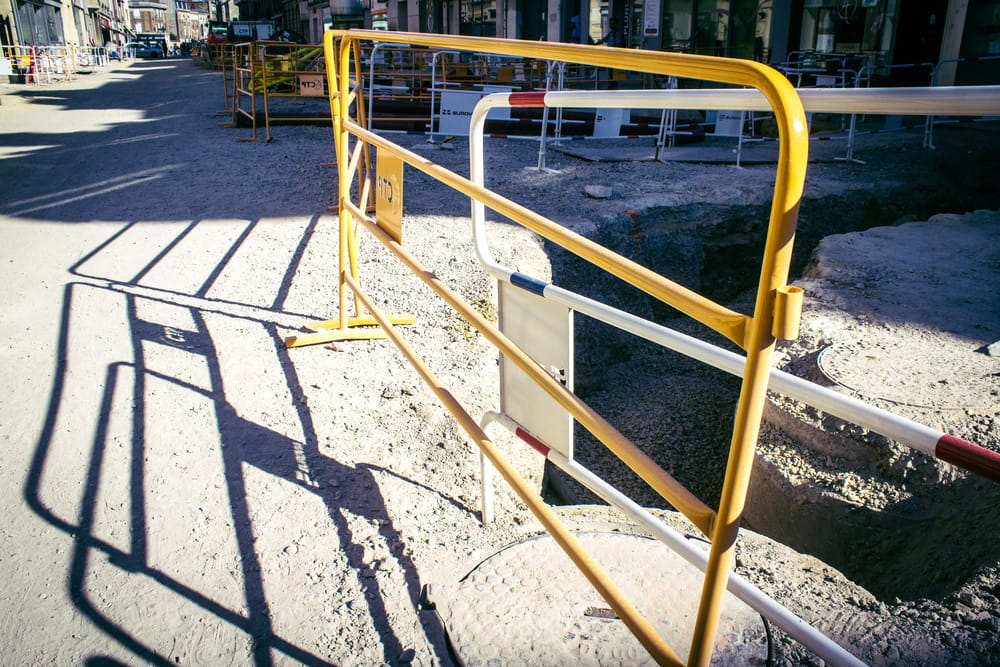
Railing systems and hatch guards are often treated as background elements on a construction site. Once they are installed, crews tend to assume they will always be there and always work as intended. The reality is that open edges and floor openings remain some of the most dangerous fall hazards in construction, even on organized and well-managed projects.
Falls near unprotected edges or openings rarely happen because workers are careless. They usually occur because attention is focused on the job, materials are being moved, or the site has changed faster than safety measures were updated. This is why railing systems and hatch guards play such a critical role in fall prevention.
Where Open Edge Hazards Commonly Exist
Open edges are not limited to rooftops. They can appear at stair landings, mezzanines, elevated platforms, loading docks, and temporary structures. Workers pass these areas repeatedly throughout the day, which increases risk exposure even when the hazard feels familiar.
Floor openings and roof hatches add another layer of danger. These openings may be covered at one point and exposed the next. When covers are removed for access, inspections, or material transfer, the hazard becomes immediate and unforgiving. Without proper guarding, a single step in the wrong direction can result in a serious fall.
How Railing Systems Protect Workers in Motion
Railing systems act as both physical and visual barriers. They prevent workers from entering unsafe zones while also signaling where safe travel paths exist. This guidance is especially important on busy job sites where multiple crews are working at the same time.
Well-designed railing systems support normal workflow instead of restricting it. They help manage foot traffic, reduce congestion near edges, and allow workers to focus on their tasks without constantly worrying about their footing. Temporary railing systems are particularly valuable on projects that evolve day by day, adapting as work progresses.
Why Hatch Guards Are Essential, Not Optional
Hatch guards are one of the most effective ways to protect floor and roof openings. Unlike temporary covers, hatch guards remain in place even when an opening is being actively used. This provides continuous protection without interrupting access.
Many incidents occur when a hatch is opened briefly and left unguarded. Workers who are unfamiliar with the site or returning after a break may not realize the opening is exposed. Hatch guards eliminate this uncertainty by maintaining a visible and physical barrier at all times.
Common Mistakes That Increase Fall Risk
One of the most common mistakes is relying solely on covers or warning tape instead of proper guarding. Covers can shift, degrade, or be removed without notice. Warning tape may fade into the background and does not stop a fall from occurring.
Another issue is removing railings temporarily to speed up work and forgetting to reinstall them. These gaps in protection often go unnoticed until an incident occurs. Clear procedures and accountability are essential to prevent these breakdowns.
Inspection and Ongoing Maintenance
Railing systems and hatch guards are only effective if they remain secure and intact. Fasteners can loosen, components can wear down, and site conditions can change. Regular inspections help ensure these systems continue to perform as intended.
Inspections should check for stability, proper attachment, visible damage, and obstructions. Addressing small issues early prevents larger failures and keeps protection consistent throughout the project.
Integrating Guard Systems Into a Broader Safety Strategy
Railing systems and hatch guards work best when they are part of a comprehensive fall safety plan. They complement training, access controls, and certified anchoring systems to reduce overall exposure to fall hazards.
Partnering with a trusted provider like American Anchor for Fall protection solutions helps ensure that guard systems are selected, installed, and maintained to meet both regulatory requirements and real job site demands.
Continue the Fall Protection Series
Guarding open edges and openings is one piece of the fall safety puzzle. Anchoring systems also play a vital role in protecting workers at height.
Continue to How to Inspect Intermittent Stabilization Anchors, Proven Best Practices to learn how proper inspection routines help maintain reliable fall protection on every job site.